Blog
How Probate Works in Georgia: A Step-by-Step Guide
By Robin Wyatt
August 28, 2026
Article Summary
Overview
"Do we really have to go through probate?" is one of the first questions families ask when a loved one passes away, usually followed closely by "how long is this going to take?" The word sounds more intimidating than the process actually is. Probate is simply how Georgia makes sure an estate is settled properly: debts get paid, the right people get notified, and what's left gets to the people it belongs to. Here's a plain-language walk-through of how it works, step by step, from our Snellville office.
What Is Probate, Exactly?
Probate is the legal process of administering a deceased person's estate under the supervision of the Probate Court. That includes validating the will (if there is one), appointing someone to be legally responsible for the estate, paying off debts and taxes, and distributing whatever remains to the heirs or beneficiaries. Every county in Georgia, including Gwinnett County, has its own Probate Court that handles this process for residents, and the Judicial Council of Georgia oversees how probate courts operate statewide.
Why Georgia Has a Probate Process
Probate exists to protect everyone involved. It gives creditors a fair chance to be paid, gives the court a chance to confirm the will is valid, and gives heirs a transparent, documented process instead of a private, informal handoff that could later be disputed. It sounds bureaucratic, but in practice it's mostly paperwork and patience, especially when there's a clear will to work from.
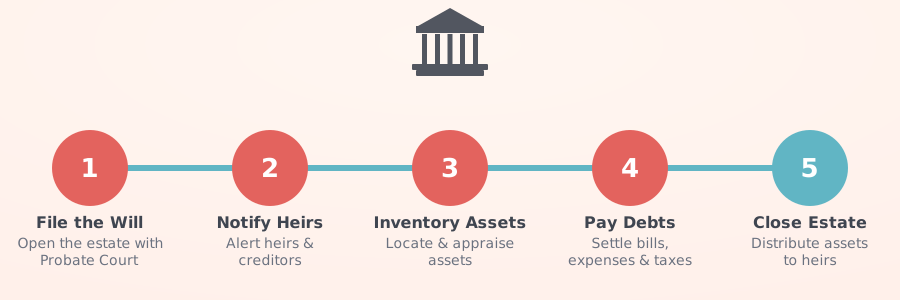
The Georgia Probate Process, Step by Step
Step 1: File the Will and Open the Estate. The person named as executor in the will (or an heir, if there isn't one) files the original will, along with a petition, with the Probate Court in the county where the deceased lived. This officially opens the estate and asks the court to appoint someone, the executor or administrator, to be legally responsible for it.
Step 2: Notify Heirs and Creditors. Heirs and beneficiaries named in the will are formally notified that probate has begun, and notice is published so that any creditors, known or unknown, have an opportunity to make a claim against the estate within the time Georgia law allows.
Step 3: Inventory and Appraise Assets. The executor locates and lists everything the deceased owned, real estate, bank and investment accounts, vehicles, and personal property, and arranges appraisals where the value isn't already clear. This inventory becomes the foundation for everything that follows.
Step 4: Pay Debts, Expenses, and Taxes. Before anyone receives an inheritance, valid debts, funeral costs, administration expenses, and any taxes owed by the estate are paid out of estate assets. This is one of the main reasons probate exists: to make sure obligations are settled fairly before distribution. On the tax front, there's some good news: according to the Georgia Department of Revenue, Georgia does not currently impose a state estate or inheritance tax, one less line item for most families to worry about.
Step 5: Distribute Assets and Close the Estate. Once debts and expenses are paid, the executor distributes what's left to the heirs or beneficiaries, according to the will or, if there isn't one, according to Georgia's inheritance laws. Real property is often transferred out of the estate with an executor's or quitclaim deed, recorded with the county Clerk of Superior Court. Once distribution is complete and accepted by the court, the estate is formally closed.
Solemn Form vs. Common Form Probate
Georgia offers two ways to probate a will. Common form probate is quicker and doesn't require notifying heirs in advance, but it leaves the will open to challenge for several years afterward. Solemn form probate requires formal notice to all heirs up front, but once it's granted, the will generally can't be contested later. Which one makes sense depends on your family situation, and it's worth discussing with your attorney rather than guessing.
How Long Does Probate Take?
A straightforward, uncontested estate in Gwinnett County often wraps up within a few months to about a year. Estates with real estate in multiple counties, disputes among heirs, hard-to-value assets, or outstanding debts can take longer. A clear, current will (updated the way we described in our post on keeping your will up to date) is one of the biggest factors in keeping the timeline short.
Do You Always Need Probate?
Not for everything. Assets held jointly with right of survivorship, accounts with a named beneficiary, like life insurance or retirement accounts, and property held in a trust typically pass directly to the co-owner or beneficiary outside of probate entirely. A good estate plan often uses a mix of tools, a will, beneficiary designations, and sometimes a trust, so probate only has to handle what's left.
Why Work With a Probate Attorney
Executors are often grieving family members handling legal paperwork for the first time, on a deadline, in an unfamiliar court process. A local probate attorney who knows the Gwinnett County Probate Court can walk you through each filing, keep the timeline on track, and take the guesswork out of a process that can otherwise feel overwhelming at exactly the wrong moment.
Frequently Asked Questions
Probate with a valid will is called testate probate: the court confirms the will and appoints the executor you named. Without a will, it's intestate probate, and the court appoints an administrator and distributes assets according to Georgia's inheritance laws rather than your personal wishes.
A straightforward, uncontested estate often wraps up in a few months to about a year. Larger or more complex estates, contested wills, or estates with significant debts can take longer. A clear, up-to-date will generally keeps the process moving faster.
No. Assets held jointly with right of survivorship, accounts with a named beneficiary, and property held in a trust typically pass directly to the co-owner or beneficiary without going through probate at all.
An executor gathers and protects the estate's assets, notifies heirs and creditors, pays valid debts and taxes, and distributes what remains to the beneficiaries, all under the supervision of the Probate Court.
Some planning, like naming beneficiaries, holding property jointly, or setting up a trust, can keep certain assets out of probate. A will doesn't avoid probate, but it does make the process faster, clearer, and far less stressful for your family.
Handling Probate for a Loved One's Estate?
If you've been named executor, or you're simply trying to understand what comes next, our Snellville office guides families through probate throughout Snellville, Lawrenceville, and Gwinnett County, Georgia, step by step and without the jargon, including preparing the deed work that transfers real property once the estate is ready to close. And if you haven't put a will in place yet for your own estate, it's worth reading why that matters before you need one. Reach out to our office and let's talk through where things stand.