Blog
Quitclaim Deeds in Georgia: Why They Matter and How They Differ from a Warranty Deed
By Robin Wyatt
August 28, 2026
Article Summary
Overview
Of the three practice areas we've been writing about lately, quitclaim deeds are probably the one people understand the least, right up until they need one. A divorce settlement, a parent adding a child to the deed, an ex-spouse's name that needs to come off the title, a property moving into a family LLC: these are everyday situations, and a quitclaim deed is usually the right tool. Here's what a quitclaim deed actually does, how it's different from a warranty deed, and a quick glossary of the terms you'll run into along the way.
What Is a Quitclaim Deed?
A quitclaim deed is a legal document that transfers whatever ownership interest the grantor (the person giving up the interest) actually has in a property to the grantee (the person receiving it). It makes no promises about the condition of the title. If the grantor's interest is clean, the grantee gets a clean interest. If there's a lien, a boundary dispute, or another owner nobody mentioned, the grantee gets that too. That's the trade-off: speed and simplicity in exchange for no guarantee.
Why Quitclaim Deeds Matter
Quitclaim deeds show up constantly in situations where the people involved already know and trust each other, and a full title guarantee isn't the point. Common examples we see in our Snellville office include:
- Adding a new spouse to the title after marriage
- Removing an ex-spouse's name from the title after a divorce
- Gifting property to a child or other family member
- Moving property into or out of a trust or LLC for estate or asset planning
- Clearing up a minor error or gap in a prior deed
In each of these cases, everyone already knows the history of the property, so a simple, fast document that gets the title updated is usually all that's needed, which is exactly what a quitclaim deed is built for.
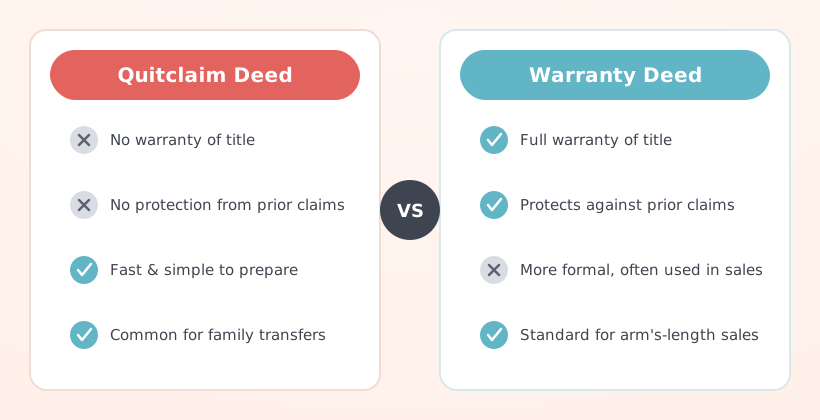
Quitclaim Deed vs. Warranty Deed
The two documents accomplish the same basic task, moving title from one person to another, but they protect the buyer very differently. A warranty deed includes the grantor's legal promise that they own the property outright and will defend the grantee against any competing claims to it. That's why warranty deeds are the standard for arm's-length purchases, buying a house from someone you don't know, where the buyer needs that protection. A quitclaim deed skips that promise entirely. It's faster and simpler to prepare, but it offers no protection if it later turns out the grantor didn't fully own what they transferred. The right choice really comes down to one question: do you already trust the person you're getting the property from? If yes, a quitclaim deed is often perfectly appropriate. If not, insist on a warranty deed and title insurance, which I wrote about in more detail in an earlier post on title insurance.
How a Quitclaim Deed Gets Recorded in Georgia
Once the deed is drafted with an accurate legal description of the property, it has to be signed by the grantor in front of a notary and an official witness to be valid under Georgia law. From there, it's typically submitted along with a PT-61 real estate transfer tax filing, and recorded with the Clerk of Superior Court in the county where the property sits, in our area, the Gwinnett County Clerk of Superior Court. Once recorded, the deed becomes part of the county's official land records, searchable statewide through the Georgia Superior Court Clerks' Cooperative Authority (GSCCCA).
Does a Quitclaim Deed Trigger Transfer Tax?
Often, yes, though transfers for little or no money, common in family and gift situations, can qualify for reduced or no real estate transfer tax. The rules depend on the specifics of the transaction, so it's worth confirming your filing with your attorney rather than guessing. You can read the general rules on the Georgia Department of Revenue's real estate transfer tax page.
A Quick Georgia Quitclaim Deed Glossary
- Grantor — The person transferring, or giving up, their interest in the property.
- Grantee — The person receiving the interest in the property.
- Consideration — What's exchanged for the property, often a nominal amount like $1 to $10 in a family or no-sale transfer.
- Legal Description — The precise, surveyed description of the property's boundaries, distinct from its mailing address.
- Warranty of Title — A legal promise that the grantor owns the property free of undisclosed claims; a quitclaim deed does not include this promise.
- PT-61 Form — Georgia's Real Estate Transfer Tax Declaration, generally filed electronically before a deed is recorded.
- Real Estate Transfer Tax — A Georgia excise tax due on most recorded deeds, based on the property's sale price or value.
- Clerk of Superior Court — The county office, such as the Gwinnett County Clerk of Superior Court, that records deeds and land records.
- Chain of Title — The chronological history of ownership of a property, traced through recorded deeds.
- Encumbrance — A claim, lien, or restriction on a property, such as a mortgage, that a quitclaim deed does not clear.
Why Work With a Local Real Estate Attorney
A quitclaim deed looks simple, and the document itself often is, but an error in the legal description, a missing witness signature, or a skipped transfer tax filing can cause real problems years later when the property is sold or passed down. Working with a local attorney means the deed is drafted correctly the first time, recorded properly with the Gwinnett County Clerk of Superior Court, and fits into the bigger picture of your estate plan, alongside your will and, when the time comes, the probate process.
Frequently Asked Questions
No. A quitclaim deed transfers whatever interest the grantor actually has, with no promise that the title is clear or that the grantor even owns the property free of claims. That's the key difference from a warranty deed.
It's strongly recommended. A quitclaim deed must include an accurate legal description, be signed, witnessed, and notarized correctly, and often needs an accompanying transfer tax filing to be recorded. Mistakes can cloud the title for years, so a properly drafted deed is worth the small upfront cost.
No, and this is one of the most common misunderstandings. A quitclaim deed changes who owns the property, but it does not change who is responsible for an existing mortgage. Removing someone from a loan requires the lender's involvement, typically through a refinance.
The signed, notarized deed, along with any required transfer tax filing, is submitted to the Gwinnett County Clerk of Superior Court for recording, after which it becomes part of the county's official land records.
Sometimes. Once an estate has gone through probate and an executor is authorized to act, a quitclaim or executor's deed can be used to move property out of the estate and into an heir's name. It's a good example of how wills, probate, and deed work often connect.
Have a Deed That Needs Attention?
Whether you're adding a name to a title, settling a divorce, transferring property to family, or moving property out of an estate after probate, our Snellville office prepares and records quitclaim and warranty deeds for clients throughout Snellville, Lawrenceville, and Gwinnett County, Georgia. And if a will isn't part of your plan yet, here's why that's worth fixing too. Reach out to our office and we'll help you get the paperwork right the first time.